Sleep setup and bedroom comfort
A Practical Guide to Adjustable Beds: Bedding Fit, Movement, and Support
A bed that moves can make it easier to settle in for reading, relaxing, or sleep. But when the head or foot of the mattress rises, bedding shifts, pillows behave differently, and familiar support may feel new. A few thoughtful checks can help your adjustable setup feel comfortable in more than one position.
An adjustable bed can turn a bedroom staple into a more flexible place to rest. With a remote or app, the head and foot of the mattress can be raised or lowered, allowing you to try different angles rather than staying flat. That movement is the appeal—and the detail that makes bedding fit worth a second look.
When the base moves, fabric can pull, pillows can slide, and the relationship between your body and mattress changes. A fitted sheet that seems perfect while the bed is flat may feel taut when the head section rises. A pillow that supports your neck in one position may feel too tall or too low in another. These are ordinary setup questions, not signs that an adjustable bed must work one particular way.
The goal is to find a configuration that suits your comfort, mattress, frame, and bedding. Start with the basics: check that the mattress is approved for use on your base, choose linens with enough room to move, and make small adjustments while paying attention to how your body feels. If discomfort persists or you have a medical concern, consult a qualified health professional rather than treating bed positioning as a substitute for care.
What changes when the bed moves?
A flat bed presents a relatively simple surface. Raising one end creates a slope, and raising both the head and foot can form a gentle bend beneath the body. The mattress flexes with the base, while sheets and protectors need to follow that movement without becoming strained or bunching into uncomfortable folds.
The effect depends on the design. Some adjustable bases move the head and foot sections independently; others offer preset positions or divided sides. A split configuration can let two sleepers choose separate settings, but it also means each side needs compatible bedding and a plan for the gap between mattresses. Before arranging a room or buying sheets, confirm the exact bed size and whether it is a single mattress or a split setup.
Even small changes in angle can alter where pressure and fabric tension are felt. When the head rises, a sleeper may feel as though they are moving toward the foot of the bed. When the legs lift, a top sheet or blanket may settle differently across the body. Think of bedding as part of a moving system: the mattress, base, protector, fitted sheet, top layers, and pillows all contribute to the experience.
Start with mattress and base compatibility
Before focusing on sheets, check the mattress manufacturer’s guidance for adjustable-base use. Not every mattress is designed to flex repeatedly, and guidance can vary by construction, thickness, and model. The base instructions also matter: they explain how it should be installed, what it can support, and any restrictions on use.
Pay attention to the overall setup, not only the mattress label. A mattress may be compatible with an adjustable base while a particular foundation, frame, or bed surround is not. Confirm that the base has adequate clearance to move and that cords, bedding, and nearby furniture cannot become caught. Follow the manufacturer’s instructions for weight limits, assembly, and maintenance.
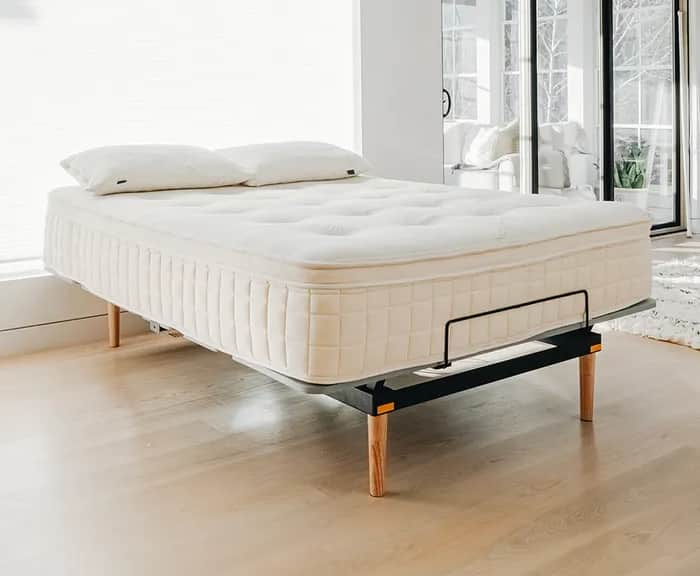
If you are considering a new frame, compare its dimensions, controls, available positions, and compatibility information with the mattress you already own. For example, the Naturepedic Conductor Adjustable Bed Frame is described as raising both the head and foot sections and offering Twin XL, Queen, and Split King configurations. Its product information also notes that the mattress is sold separately. Those details illustrate why checking size and configuration is important; they do not replace confirming compatibility for your own mattress and room.
Bedding fit: the details that prevent a nightly tug-of-war
Fitted-sheet fit is one of the first practical concerns for an adjustable bed. The elastic needs to hold the corners securely, while the sheet itself needs enough depth for the mattress and any added layers. Measure the mattress, including a topper if you use one, and compare that total with the sheet’s pocket depth. A sheet that is too shallow may pull free; one that is excessively loose can wrinkle or bunch as the bed changes angle.
Look for a fitted sheet with well-constructed elastic around the perimeter or at the corners. The goal is not maximum tightness. A sheet stretched to its limit may place unnecessary tension on the fabric and corners during movement. Conversely, an oversized sheet may not stay smooth. A snug, properly sized fit is usually more useful than simply choosing the deepest pocket available.
Mattress protectors also need to fit well and be suitable for the mattress and base. If the protector is waterproof, check its care instructions and construction; materials and layers can differ in stretch, breathability, and feel. A protector that fits smoothly is less likely to crease beneath the fitted sheet. Wash it according to its label and avoid high heat or bleach if the manufacturer advises against them, since incorrect care can affect fit or materials.
Top sheets, quilts, and bedcovers are less anchored than fitted layers. If one repeatedly slides toward the foot of the bed, try adjusting the angle, tucking in the sheet more securely, or using lighter layers that are easier to reposition. Heavy covers may feel different when the bed bends, while light coverings may move more freely. There is no universal answer: the right combination depends on the fabric, room temperature, and personal preference.
A quick bedding-fit check
- Confirm the mattress dimensions and the depth of any topper.
- Check the fitted-sheet pocket depth and elastic coverage.
- Choose a protector sized for the mattress and follow its care label.
- Raise and lower the bed slowly after making it, watching for pulled corners or folded fabric.
- Keep loose bedding away from the base’s moving parts and follow the frame manual.
- For a split bed, confirm whether each side needs its own fitted sheet and protector.
Pillow support changes with position
A pillow’s job is to support the head and neck in a way that feels comfortable for the sleeper. When the head of the bed rises, the angle of the upper body changes, so a pillow that felt right while lying flat may not feel the same. It might seem too bulky, too low, or prone to sliding. That does not mean you need to buy a special pillow immediately. First, try the new position with your usual pillow and notice what feels different.
Consider the relationship between the pillow, neck, shoulders, and mattress rather than judging height in isolation. A side sleeper and a back sleeper may prefer different lofts, and preferences vary from person to person. If you shift between positions, a pillow with adjustable fill can make it easier to experiment, but it is still a matter of comfort rather than a guaranteed solution.
Body pillows can provide another point of contact for people who like to rest an arm or leg against a cushion. In a raised position, however, a long pillow may shift or press differently against the body. Arrange it so it does not interfere with the base or restrict movement. If you find yourself constantly propping up pillows to keep them in place, reconsider the angle or the arrangement rather than forcing an awkward stack.
Take care when raising the bed with someone else sharing it. A change that feels comfortable to one person may not suit the other, especially on a single-piece mattress. Split adjustable systems may allow independent positioning, but the gap, mattress edges, and bedding still need attention. A brief conversation about preferred positions can prevent nightly adjustments from becoming a surprise.
Finding a comfortable angle without chasing a magic setting
Adjustable bases often include preset positions, but a preset is a starting point—not a promise that it will feel right for every body. Try gradual changes rather than jumping immediately to a steep angle. Give yourself a moment to notice whether your head, neck, back, hips, or legs feel relaxed. If a setting creates strain, return to a more comfortable position.
Different activities may call for different setups. Someone may prefer a raised head while reading, then a flatter position for sleep. Another person may want the legs slightly elevated while relaxing. The important question is whether the position feels comfortable and can be changed easily, not whether it matches a trend or a particular label such as “zero gravity.” Terms used for preset positions can describe a frame setting; they are not a diagnosis or a guarantee of a health outcome.
Move the base with care, especially if you have children or pets nearby. Keep hands and feet clear of moving joints, and use any child-lock or safety feature according to the manufacturer’s directions. Make sure the remote is easy to reach but not placed where it could fall into a mechanism. A simple habit—checking the area before adjusting—helps make routine movement less stressful.
Make the room work with the bed
An adjustable setup can change how you use the space around the bed. A nightstand that was easy to reach when the mattress was flat may be farther away after the head section rises, depending on the base design. A wall-hugging feature, where included, is intended to help keep the sleeper closer to the bedside surface as the bed moves, but room layout and product specifications differ.
Check for adequate clearance at the sides and foot of the bed. Keep cables, slippers, charging cords, and anything that could snag away from moving parts. If the frame has under-bed lighting, USB ports, Bluetooth, or app controls, review the instructions and set up any connections before relying on them. Keep the remote accessible, and know how to return the base to a flat position if needed.
Comfort is also shaped by temperature and texture. A breathable sheet may feel more pleasant if you tend to sleep warm, while a heavier cover can feel comforting in a cool room. An adjustable bed does not automatically require a new bedding wardrobe; familiar sheets and blankets may work well if they fit securely and move without bunching. Change one thing at a time so you can tell what actually improves the setup.
Common setup problems—and simple first steps
The fitted sheet pulls off at a corner
Check that the sheet dimensions and pocket depth match the mattress, including any topper. Make sure each corner is fully seated before moving the base. If the fabric still pulls, try a properly sized sheet with secure elastic rather than stretching the current one tighter. Also verify that the mattress is positioned as directed on the base.
The top sheet or blanket slides down
Try a small change in the bed angle and see whether a lighter layer stays in place more comfortably. A neatly tucked top sheet may help, though very tight tucking can feel restrictive or pull as the bed moves. The best arrangement is one that remains comfortable and does not interfere with the frame.
The pillow no longer feels supportive
Test the pillow in the position you actually plan to use, not only while the bed is flat. Adjust the angle in small steps, and change pillow placement before adding more pillows. If discomfort continues, reconsider whether the pillow’s height or firmness suits your sleep position. Persistent pain or symptoms deserve guidance from a healthcare professional.
The mattress or frame makes an unusual sound
Stop and consult the product instructions if a sound is new, repeated, or accompanied by uneven movement. Check only the parts the manufacturer identifies as user-serviceable. Do not reach into moving mechanisms or attempt repairs while the base is powered. Contact the manufacturer or a qualified service provider when needed.
A practical first-night routine
Before settling in, make the bed with the base flat and smooth the protector and fitted sheet. Raise the head and foot a little at a time, watching how the corners and top layers respond. Try the pillows in the position you expect to use, and keep the remote within reach. If the bedding shifts, return the base to flat before rearranging it, rather than tugging against a moving bed.
Then give the setup a few ordinary nights. A new angle can feel unfamiliar at first, and one evening may not tell you whether a change is genuinely more comfortable. Keep notes if you are testing several combinations: the position, pillow arrangement, and any bedding that moved. A short, practical record can make it easier to identify a pattern without turning bedtime into a complicated project.
The takeaway: adjust the whole sleep surface
An adjustable bed is more than a frame with a remote. The mattress needs to be compatible, bedding needs room to move, and pillows may feel different as the body’s angle changes. A well-fitting protector and fitted sheet can help keep the sleep surface smooth; thoughtful pillow placement can make it easier to settle; and gradual adjustments can help you discover which positions feel comfortable.
There is no single ideal angle or bedding combination for everyone. Start with manufacturer guidance, make small changes, and pay attention to comfort rather than promises. With a little trial and error, the bed can move without making the sheets, pillows, or bedtime routine feel like they are working against you.