Bedding · Summer comfort
Why Cotton Voile Works Well for Lightweight Summer Bedding
When warm nights make a heavy bed feel like one layer too many, cotton voile offers a softer, airier alternative. Its fine weave, light drape, and easygoing texture can bring a cooler feel to summer bedding—provided you understand what the fabric can and cannot do.
There is a particular moment in summer when the bedroom seems to hold on to the day’s heat. The fan is on, the windows may be open, and even a familiar duvet can suddenly feel like too much. Changing the bed’s top layers is a small adjustment, but it can make the room feel lighter and more inviting. That is where cotton voile often earns its place.
Voile is a fine, lightweight cotton fabric with a fluid drape and an airy hand. In bedding, it may appear as a sheet, a coverlet, or a light bedspread. The name describes the fabric, not a single type of bedding: the item’s construction and how you use it matter just as much as the material itself. A voile sheet rests directly against the body; a voile bedspread sits over sheets and adds a light cover and decorative texture.
Neither can promise a particular sleep outcome, and no fabric can control the temperature of a room. But cotton voile can help a bed feel less bulky and more breathable than one piled with dense layers. For anyone rethinking summer bedding, it is a useful material to know—not a magic fix, but a practical way to make the bed feel a little more season-ready.
What cotton voile feels like
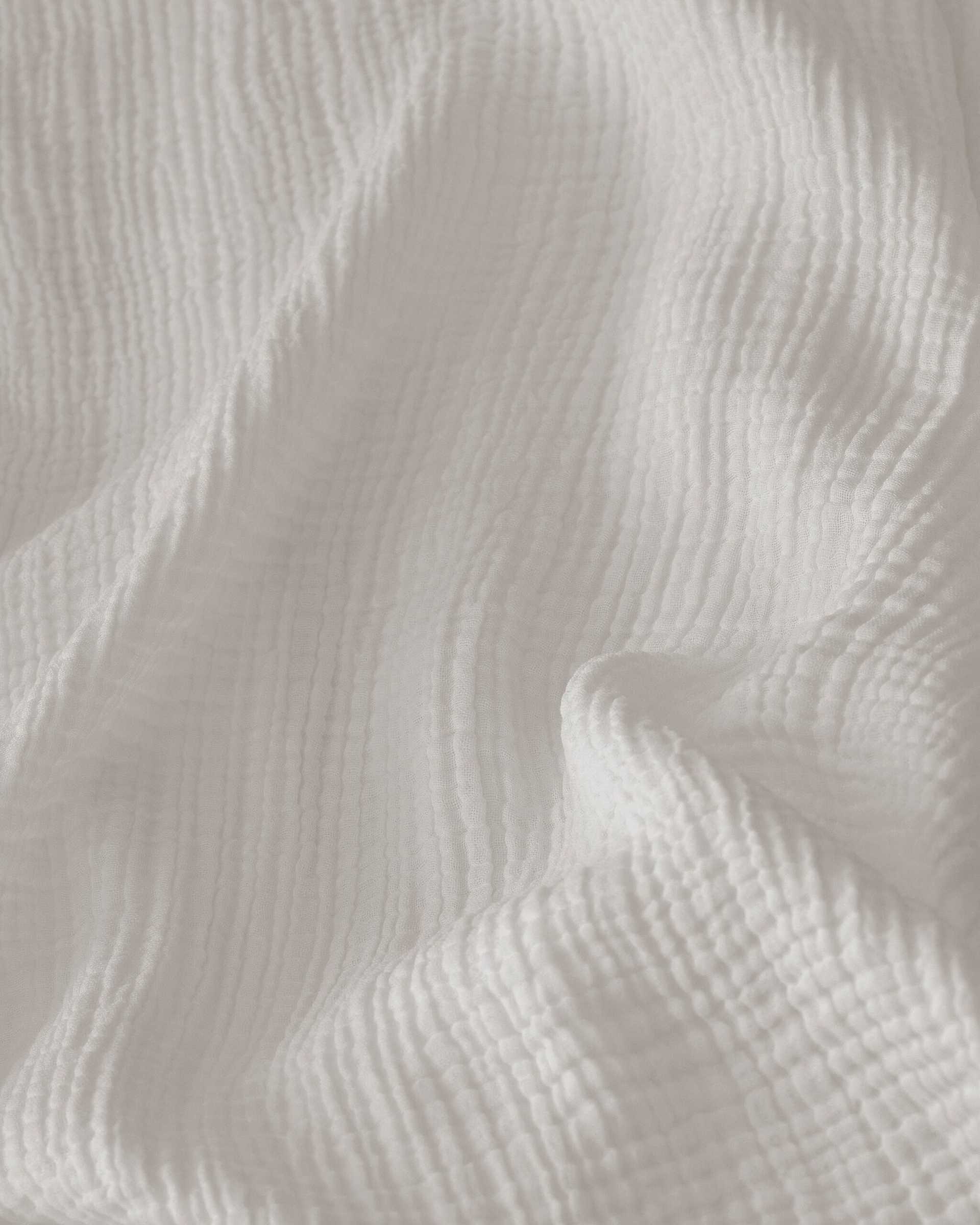
At first touch, voile tends to feel light and delicate. Its fine yarns and relatively open, airy construction give it a gentle drape rather than the substantial, crisp body of heavier cotton. Depending on the finish and weave, it can feel smooth, softly textured, or slightly sheer. That variation is one reason it helps to look at the finished fabric rather than relying on the word “voile” alone.
Some voile bedding is made from a single layer, while some bedspreads use multiple thin layers. Layering gives the fabric more body and texture without necessarily making it feel as weighty as a dense quilt. For example, the Free New Bedcover is described as four extra-thin layers of 100% cotton voile, with a raised pattern and a listed weight of 140 g/m². That is a bedspread, not a fitted or flat sheet, so it is best understood as a light top layer that can be used over sheets.
Its soft, relaxed appearance can also make the bed feel thoughtfully made without looking overly formal. Voile gathers and falls in gentle folds, lending a casual finish that suits a simple summer setup. If you prefer crisp, taut, hotel-style sheets, that easy drape may feel less polished than percale. If you like a bed that looks soft and inviting, it may be exactly the point.
Why an airy fabric can feel comfortable in warm weather
Warm-weather comfort is shaped by several things at once: room temperature, humidity, airflow, sleepwear, bedding layers, and personal preference. A breathable fabric can help moisture and warmth move away from the body more readily than a dense covering, but it does not cool the room or work like an air conditioner. Cotton voile’s appeal is more modest and more practical: it can provide a light layer without the enveloping weight of a thick comforter.
Cotton fibers absorb moisture, and the feel of a cotton fabric depends on its yarn, weave, finishing, and thickness. Because voile is typically fine and lightweight, it can feel less stuffy than heavier bedding in hot conditions. The open, airy character may also let air circulate more freely through the fabric than a tightly constructed, substantial cover. In a warm bedroom, those qualities can help the bed feel less closed-in.
That difference is especially noticeable for people who like some covering at night but find a heavy duvet uncomfortable during summer. A light voile bedspread can serve as a gentle layer over a sheet, making the bed feel finished while leaving room to adjust. If the night cools down, it can provide a little more coverage; if it stays warm, it is generally easier to fold back than a bulky quilt.
It is worth keeping expectations realistic. “Breathable” does not mean that every sleeper will feel cool, nor does it mean that voile is automatically the best choice for every climate. In humid conditions, any cotton fabric may feel damp if moisture has nowhere to go. A fan, good ventilation, and a sensible number of bedding layers still matter. The fabric is one piece of the sleep environment, not the whole solution.
Voile sheets versus a voile bedspread
Searches for cotton voile sheets can lead to products that are not sheets at all. Since voile is a fabric category, it can be used in several bedding formats. A bedspread in voile may have the same light, airy qualities people want from summer sheets, but it serves a different purpose and should not be expected to fit or function like a sheet set.
- Voile sheets sit close to the skin and should be sized to fit the mattress. Check the product details for whether the set includes a fitted sheet, flat sheet, and pillowcases.
- A voile bedspread is a top layer. It can add a light cover and a decorative finish, but it does not replace a fitted sheet or necessarily provide the same warmth as a blanket.
- A layered voile cover may have more texture and substance than one thin panel, while still feeling comparatively lightweight. The number of layers and overall weight are useful details to check.
- A voile curtain or garment may use a similar fabric, but its finish and intended use do not automatically make it appropriate for bedding.
Before choosing, identify the job you want the fabric to do. If you are looking for a breathable surface to sleep directly on, focus on sheet specifications and mattress fit. If you want to replace a heavy summer duvet with a lighter decorative cover, a cotton voile bedspread may be more relevant. That simple distinction can make shopping less confusing and help you avoid expecting one bedding piece to do another piece’s job.
How voile compares with other sheet fabrics
There is no universal winner among sheet fabrics. Comfort is personal, and the same material can feel different depending on its construction, finishing, and quality. Comparing voile with familiar alternatives is useful because it clarifies the kind of sensation and upkeep you prefer.
Cotton voile and percale
Percale is known for a crisp, matte feel and a relatively firm, smooth surface. It often appeals to sleepers who like sheets that feel cool and structured. Voile is typically more delicate and fluid, with a softer, lighter drape. If you want a bed that looks relaxed and feels barely there, voile may appeal; if you prefer a clean, crisp finish, percale may be a better match.
Cotton voile and sateen
Cotton sateen usually has a smoother, silkier surface and more drape than percale. Depending on its weight and construction, it can feel more substantial than voile. People who love a supple, smooth sheet may gravitate toward sateen, while those seeking a very light layer may prefer voile. Neither fabric is automatically cooler for every sleeper: the exact weave, fabric weight, and bedroom conditions all play a part.
Cotton voile and linen
Linen often has a more pronounced natural texture and a sturdy feel that softens with use and washing. Its distinct, relaxed look makes it a popular warm-weather choice, though it can feel more substantial and rumpled than fine voile. Voile offers a lighter, finer impression; linen offers a more textured, robust one. Choosing between them is as much about the feel you enjoy as it is about seasonal use.
Cotton voile and microfiber
Microfiber bedding is generally made from very fine synthetic fibers and may feel smooth, soft, or brushed. Its performance varies by construction, and some people find it less airy than lightweight cotton. Voile provides a natural-fiber option with a different hand and drape. If fiber content matters to you, read the label rather than assuming a product’s look tells the full story.
In every comparison, fabric weight and construction are more informative than a single marketing word. “Lightweight,” “cooling,” or “breathable” can describe a general impression, but product details—fiber content, layers, weave, dimensions, and care instructions—help you understand what is actually on the bed.
The care routine that helps preserve voile
A fine, lightweight fabric deserves a gentler approach than a rugged towel or a sturdy canvas tote. Care instructions vary between products, so the manufacturer’s label should always take priority. In general, gentle washing and careful drying can help preserve the fabric’s feel and reduce avoidable wear.
- Read the care label first. Fiber blends, dyes, finishes, and layered construction can all affect the recommended wash method.
- Wash with like items. Keep voile away from garments with zippers, hooks, or rough surfaces that could snag fine yarns.
- Choose a gentle cycle when permitted. A mild detergent and moderate water temperature are often sensible for delicate cotton, but follow the specific product instructions.
- Avoid overloading the machine. Bedding needs room to move. Crowding can increase friction and leave bulky pieces poorly rinsed.
- Dry with care. If tumble drying is allowed, use the recommended setting and avoid excessive heat. Air drying may be suitable for some pieces, but confirm the label first.
- Store only when fully dry. Dry bedding completely before folding it away, and keep it in a clean, dry place between seasons.
Lightweight does not mean indestructible. Fine fabrics can snag, stretch, or wear more quickly if they are washed roughly or handled while caught on sharp edges. Taking a few minutes to separate delicate bedding from abrasive laundry is a simple step toward keeping it in good condition. If a piece has several layers or a textured surface, avoid pulling at loose threads; address small snags carefully according to the maker’s guidance.
How to build a summer bed around voile
The easiest way to use voile is to treat it as one component in a deliberately simple bed. Start with a sheet set that feels comfortable against your skin. Add only the layers you need for the room and your personal comfort, then keep a lighter cover within reach if nighttime temperatures shift. A voile bedspread can complete that arrangement without making the bed feel as heavily dressed as it might under a thick quilt.
Think about what happens during the entire night, not just at bedtime. A warm evening may turn cooler before morning, especially in a room with an open window or strong air conditioning. A light top layer gives you flexibility: it can be pulled over the body, folded to the foot of the bed, or removed entirely. That adjustability can be more useful than choosing a single heavy covering and hoping the temperature stays constant.
Also consider the room itself. Breathable bedding works best as part of a sleep space with reasonable airflow and a temperature that feels comfortable to you. Keep bedding clean and dry, and avoid stacking layers that trap warmth if you already tend to sleep hot. If allergies or sensitive skin are a concern, check the complete product description and laundering instructions; a fabric’s name alone does not establish that it will be suitable for a particular person.
For a calm, unfussy look, pair a lightly textured voile cover with simple sheets and a restrained color palette. The fabric’s drape can add softness without requiring lots of decorative cushions or heavy accessories. Practicality can be beautiful: an uncluttered bed is easier to remake, easier to adjust, and often more comfortable on the hottest nights.
What to check before choosing cotton voile bedding
Product descriptions can make similar fabrics sound interchangeable, so focus on a few concrete details before deciding. If you are buying online, look for a clear description of the item’s intended use and construction. If the details are missing, it is reasonable to ask whether you are looking at sheets, a coverlet, or a decorative bedspread.
- Fiber content: Confirm whether the fabric is 100% cotton or a blend. The label should make this clear.
- Construction: Check how many layers are used and whether the surface has a raised or textured finish.
- Weight: A stated fabric or product weight can help you compare items, though numbers are most useful alongside construction details.
- Measurements: Verify dimensions carefully. A bedspread may extend beyond the mattress, while sheets require a specific mattress size and depth.
- Care: Check washing and drying requirements before purchase, especially if you prefer bedding that can go through a simple routine.
- Transparency: Look for straightforward information about materials and construction rather than relying on broad claims about sleep or temperature.
These checks are useful for any bedding material, but they are especially helpful with lightweight fabrics. A product can look airy in a description and still have a different feel once its layers, finish, and scale are considered. Clear specifications help set expectations and make it easier to compare voile with percale, linen, or other sheet fabrics.
Is cotton voile right for every sleeper?
Not necessarily—and that is perfectly fine. Some sleepers love a delicate, light cover; others want the reassuring weight of a quilt, a crisp sheet, or a smooth, substantial fabric. Voile’s softness and airy drape can be appealing, but its fine construction may not suit anyone seeking a highly durable, everyday workhorse with a firmer feel. It may also require more careful handling than heavier bedding.
Personal temperature preferences matter, too. A warm sleeper may appreciate a light top layer, while someone who feels cold at night may need additional warmth. A breathable fabric cannot replace insulation when the room is chilly. Likewise, a light bedspread will not provide the same cushioning or warmth as a thick comforter. Choosing the right combination means being honest about how you sleep, the climate you live in, and how much maintenance you are willing to take on.
If possible, consider the texture in person or buy from a seller with a clear return policy. Fabric descriptions are helpful, but touch is personal. What one person calls featherlight, another may find too sheer or too delicate. A good bedding choice is not the trendiest one; it is the one that feels comfortable and works with your routine.
A lighter touch for summer nights
Cotton voile brings a distinctive combination of softness, fine texture, and light drape to summer bedding. Its airy character can make a bed feel less bulky, and a voile bedspread can add a breathable-feeling top layer when a heavy duvet is out of season. The most important distinction is whether you are choosing voile sheets for direct contact with the body or a voile bedcover for the top of the bed; the fabric may be the same, but the purpose is different.
Compare construction and weight, check the care label, and keep expectations grounded. Voile will not cool a room or guarantee a better night’s sleep, but it can help create a lighter, more adjustable bedding setup. When the weather warms and the bedroom calls for fewer layers, that gentle shift may be just the refresh your bed needs.